Table of contents
Overcrowded capitals are still drawing headlines, from Venice’s day-tripper fees to Barcelona’s new limits on short-term rentals, and yet the quieter story is unfolding far from the bottlenecks: travelers are recalibrating, looking for places that feel lived-in rather than staged. Hidden villages, once dismissed as “too remote,” are now showing up in search data, airline routing decisions, and even municipal budgets across Europe. The shift is not just about aesthetics, it is about time, cost, and the kind of contact with local life that mass tourism increasingly struggles to deliver.
Overtourism pushes travelers off the map
Want a simple indicator that the center is saturated? Look at what cities are willing to charge just to manage the flow. Venice began applying an entry fee for day visitors in 2024, a measure designed to discourage peak-day surges and to fund crowd-control efforts, and although the sums are modest, the symbolism is stark: access itself has become a lever. In Spain, Barcelona has repeatedly tightened rules around tourist accommodation, and Amsterdam has pursued restrictions on river cruises and nightlife tourism, all in the name of livability; when destinations famous for welcome start legislating limits, travelers notice, and many start scanning the periphery.
The economic logic adds weight to the cultural argument. In many European hotspots, nightly rates surged during the post-pandemic rebound, and transport hubs became choke points, with long museum queues, reservation-only “walks,” and the kind of friction that turns a weekend away into an obstacle course. Meanwhile, smaller towns and villages, especially those within 60 to 120 minutes of major rail stations, offer a different value proposition: lower accommodation costs, more flexible meal times, and, crucially, space. This is not merely anecdotal; across the EU, tourism accounts for roughly one in ten jobs, and regional authorities increasingly see dispersion as a resilience strategy, spreading visitor spending beyond a single historic core and smoothing the peaks that punish residents.
Digital behavior is reinforcing the shift. Google has said that “near me” searches have been among the fastest-growing types of queries in recent years, and travel platforms have leaned into “off-the-beaten-path” filters, a reminder that discovery is now algorithmic as much as geographic. The irony is that the very tools that once amplified famous landmarks are now elevating lesser-known places, because travelers are typing different questions, and because social feeds reward novelty. The result is a new itinerary style: fewer bucket-list icons, more micro-destinations stitched together, and a willingness to sleep outside the postcard center to reclaim daylight hours.
What “hidden” really means in 2026
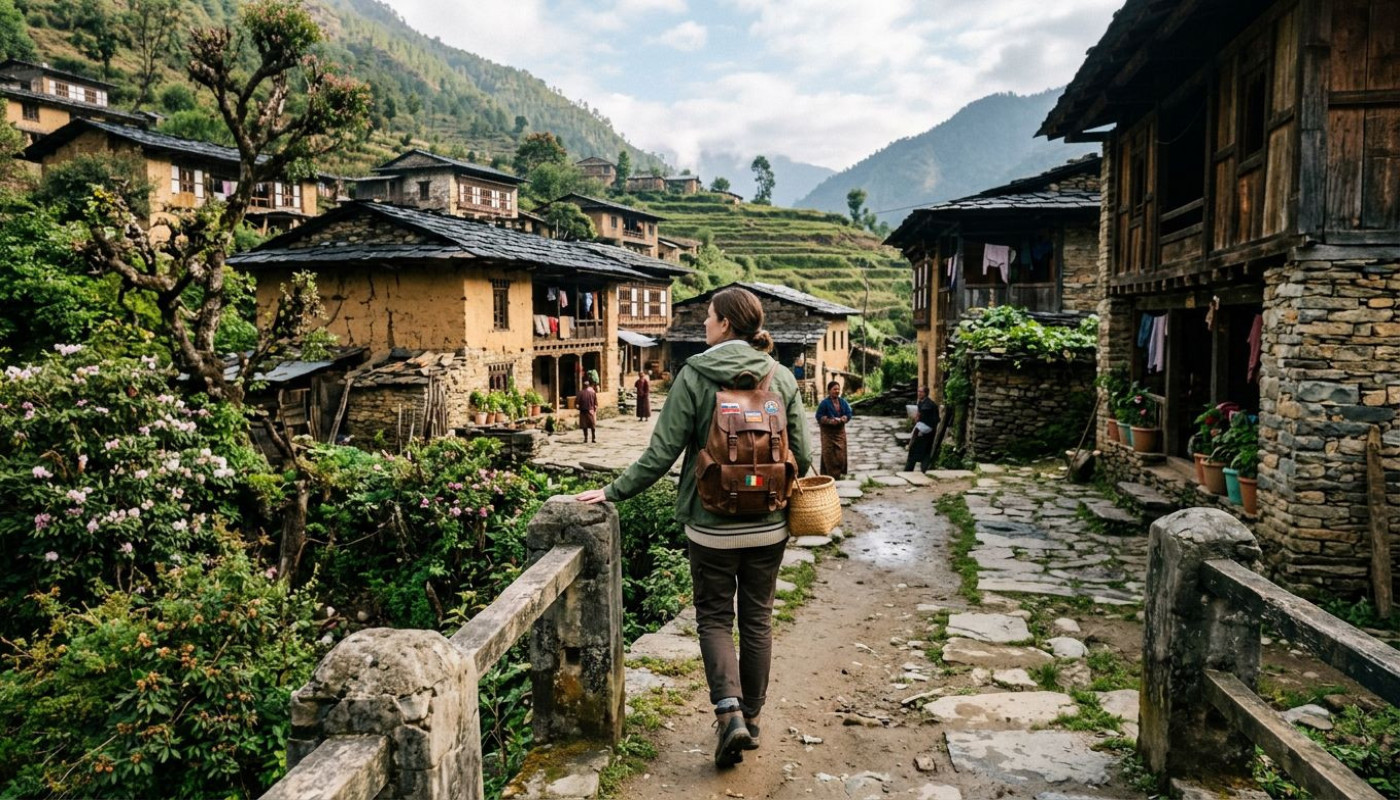
“Hidden” does not mean inaccessible, and it certainly does not mean empty. In 2026, a hidden village is often a place with strong identity, good transport links, and a tourism footprint that remains light enough to feel authentic, even in high season. Think of communities where the morning market still serves locals first, where a café owner remembers regulars, and where the church square is used for school events rather than photo shoots. The charm is real, but so are the constraints: limited room stock, fewer late-night services, and, at times, weaker mobile coverage once you move into valleys or hill towns.
There is also a statistical reality behind the romance. Italy, for example, is a country of small municipalities: the national institute of statistics (ISTAT) has long documented that the majority of Italian comuni have fewer than 5,000 inhabitants. That structure creates a dense network of villages within reach of big cities, and it explains why “base in a town, day-trip to the icons” works so well. France shows a similar pattern, with thousands of communes and a deep bench of heritage towns; Spain’s interior provinces are filled with villages that rarely appear in mainstream itineraries, yet sit near major rail corridors and natural parks. In practice, “hidden” often means “one transfer away.”
The difference today is how travelers use these places. Instead of treating a village as a quick photo stop, many are using it as a base: a slower routine, then targeted day trips, and finally evenings back in quieter streets. This has consequences for local economies. Longer stays shift spending from admission tickets to groceries, bakeries, small museums, and independent guides, and they reduce the pressure on fragile historic centers at peak hours. For the traveler, it also changes the rhythm: fewer rushed mornings, more unplanned conversations, and a better chance of seeing everyday life rather than a performance staged for outsiders.
How villages change the trip’s budget
Can a hidden village really make a trip cheaper? Often, yes, but the savings come with trade-offs that require a more journalistic, numbers-first look. Accommodation is the most obvious lever. In many major European cities, central hotel rates rose sharply after 2022, driven by demand recovery and constrained supply, and while prices vary widely by season and event calendars, the pattern is consistent: the closer you are to the marquee attractions, the more you pay for convenience. In contrast, villages within commuting distance can offer lower nightly rates, especially if you book outside peak weekends, and if you are comfortable with smaller, family-run properties rather than full-service chains.
Transport, however, can eat into those gains, and it is where itineraries succeed or fail. A village base works best when the rail or bus network is frequent, and when the last return service is not painfully early. In Italy, high-speed rail has transformed city-to-city travel, but the “last mile” still matters, and regional services can be less predictable during strikes or maintenance. The smart budget move is to choose a village with redundancy: more than one route back, or a mix of train and bus options, then to price day passes and advance fares before committing. Add up the transfers, and you learn quickly whether a charming hillside stay is a bargain or a false economy.
Food can be the quiet financial win. Tourist centers often carry a “location premium,” and while great meals exist everywhere, the baseline price for a simple lunch can be materially higher in the busiest zones, especially around landmark clusters. In smaller towns, menus tend to track local purchasing power, and the difference shows up in coffee, pastries, and set meals, not just in fine dining. There is also a non-monetary budget: time. Villages can reduce the “queue tax,” the hours lost to overcrowded attractions and fully booked restaurants, replacing it with longer walks and calmer museums where you can actually linger.
To plan efficiently, travelers increasingly rely on specialized local resources rather than generic listicles. If your goal is to build a village-first itinerary around Tuscany while still hitting Florence’s essentials without feeling trapped in the crush, using a focused planning hub such as https://www.florence-trip.com/ can help you compare day-trip logistics, understand what is realistically doable by train or bus, and avoid the common mistake of overstuffing a schedule that looks fine on a map but collapses in real life.
Finding villages without “ruining” them
Here is the uncomfortable question: if everyone goes looking for hidden villages, do they stay hidden? The history of tourism suggests not, and the backlash against overtourism has shown how quickly local tolerance can erode when housing, noise, and public space tilt toward visitors. Yet the answer is not to stop traveling, it is to travel with intent. The most sustainable “discovery” often looks boring on social media: shoulder-season weekends, longer stays with fewer destinations, and activities that spread people out, like cycling routes, craft workshops, or small-scale food tours that cap group sizes.
Respect begins with accommodation choices. In many regions, short-term rentals have squeezed local housing supply, and city governments have responded with caps and licensing schemes; travelers can support compliance by booking registered properties, and by favoring small hotels, agriturismi, or guesthouses that employ local staff. Mobility matters, too. Villages can be fragile under car traffic, and parking pressure is a frequent complaint; using rail when possible, then walking, is not only lower-impact, it is often the best way to experience a place that was designed for feet, not for SUVs.
There is also a cultural dimension that rarely makes it into itinerary templates: villages have calendars. A quiet town in April can be a different world during a religious festival, a harvest celebration, or a summer concert series, and arriving without context can lead to misunderstandings, or missed opportunities. Doing basic reporting before you arrive, checking municipal websites, local papers, or tourism offices, gives you a truer picture of what is happening, and helps you participate without turning community life into a backdrop. Spending follows the same principle. Buying from local producers, paying for guided visits led by residents, and choosing restaurants that serve regional dishes rather than “tourist greatest hits” keeps money in the place you came to experience.
Ultimately, the goal is not to “collect” villages, it is to let one or two places open up over time. Hidden villages can reshape an itinerary precisely because they slow you down, and because they reduce the temptation to perform travel for an audience. If you come home with fewer landmark photos but a sharper sense of how a region eats, works, and rests, you have likely found what the new travel mood is seeking: not secrecy, but intimacy.
Booking smart: timing, transport, and small help
Plan villages the way locals plan their week: around transport, not around wish lists. Reserve key train legs early when fares are dynamic, confirm the last return service at night, and build one “buffer” afternoon to absorb delays, closures, or weather. Budget for local buses, taxis, and paid parking, and check whether regional passes reduce costs on multi-day routes.
Similar articles
From Adrenaline To Zen: What Your Choice Of Travel Activities Says About You
Why Do Off-the-beaten-path Destinations Create Unforgettable Travel Memories?
Beyond Sightseeing: How Unique Local Activities Transform Your Journey
Are Your Travel Activities Shaped By Local Legends Or Marketing Myths?

Adventure Sports In Wine Country: From Rock Climbing To Kayaking

Essential Packing Checklist For Your Upcoming Sailboat Holiday

Exploring The Benefits Of Renting Versus Buying Ski And Bike Equipment

Exploring The Charm Of A 3-star Boutique Hotel In Paris's 13th District

Exploring The Benefits Of Seasonal Camping In A Luxury Setting
